
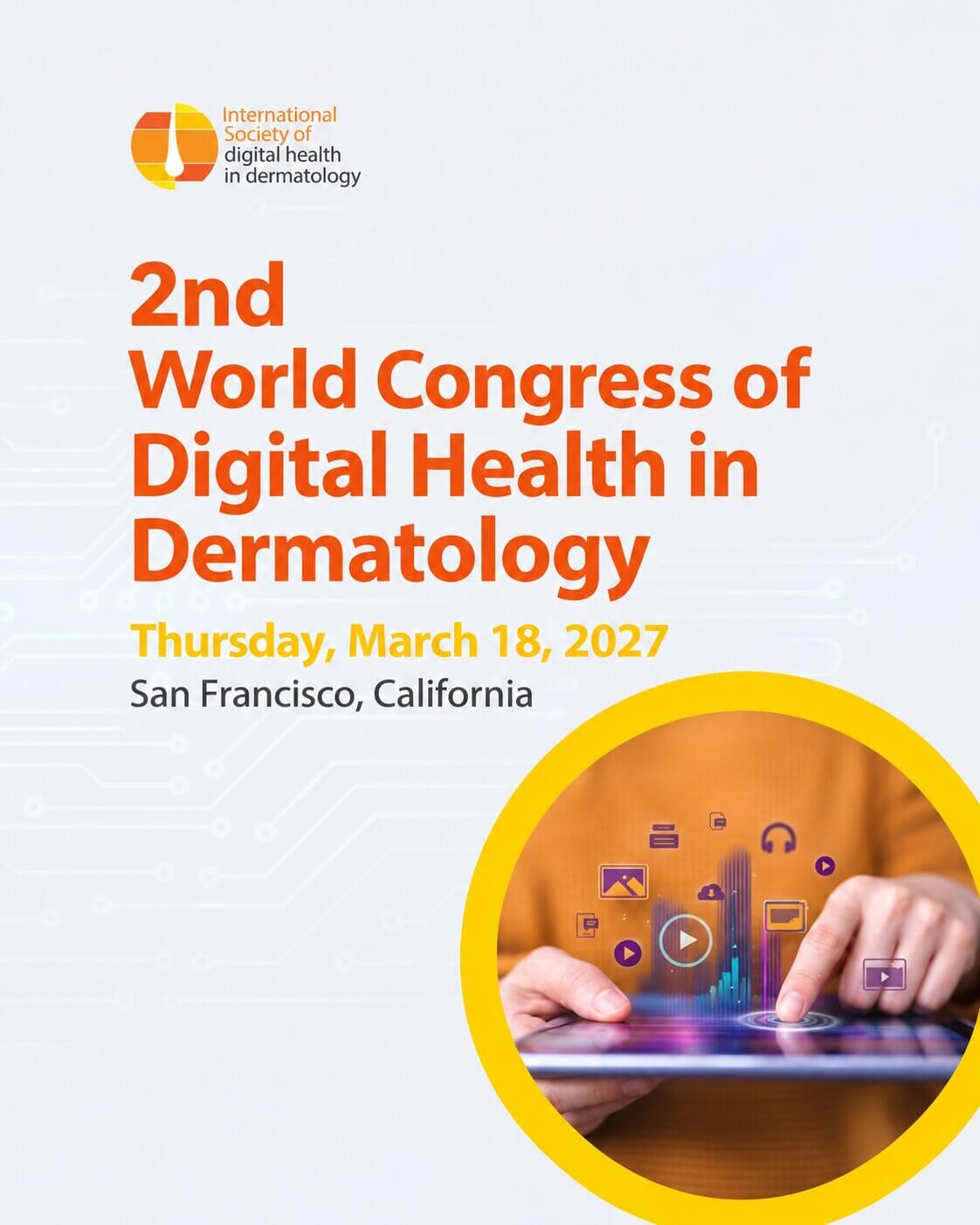
2nd World Congress of Digital Health in Dermatology
Price range: $0.00 through $1,000.00
Hosted by the International Society of Digital Health in Dermatology
Date: Thursday, March 18, 2027
Time: 08:00 – 17:00
Location: San Francisco, California
Agenda
08:00–08:05 (5 min)
Welcome and Opening Remarks
Congress Chairs. Scope of the day, house rules, and how the sessions connect.
08:05–08:35 (30 min)
Residents and Medical Students Forum
Trainee-led opening session on how digital tools are reshaping dermatology training and early careers. Short trainee presentations followed by a mentor panel and open floor.
08:35–09:05 (30 min)
Plenary Lecture I — The Digital Transformation of Dermatology
State of the field: what has changed in practice, what has not, and where the evidence now stands.
09:05–09:50 (45 min)
Session 1 — Non-Invasive Imaging
Dermoscopy, reflectance confocal microscopy, OCT and LC-OCT, high-frequency ultrasound, and 3D total-body photography. Diagnostic performance, workflow integration, and reimbursement realities.
09:50–10:35 (45 min)
Session 2 — AI and Dermatology
Diagnostic algorithms, foundation and multimodal models, performance across skin tones, prospective validation, and regulatory pathways.
10:35–10:55 (20 min)
Coffee Break and Exhibits
Refreshments served in the exhibition foyer.
10:55–11:35 (40 min)
Session 3 — AI Tools in the EHR/EMR
Ambient documentation and AI scribes, coding support, inbox and prior-authorization automation. Safety, liability, and how to measure the effect on clinician burden.
11:35–12:15 (40 min)
Session 4 — AI in Dermatology Retail and the Consumer Market
Direct-to-consumer skin analysis, cosmetic and aesthetic apps, in-store and at-home devices. Claims, evidence standards, and the boundary with professional care.
12:15–13:15 (60 min)
Lunch, Exhibits, Posters and Industry-Sponsored Symposium
Lunch served in the exhibition foyer with poster and abstract viewing. A non-CME industry-sponsored symposium runs concurrently in the main hall; poster presenters stand with their boards for the second half hour.
13:15–13:45 (30 min)
Plenary Lecture II — Evidence, Governance and Trust
What must be true — in evidence, regulation, equity and reimbursement — for digital dermatology to scale responsibly.
13:45–14:30 (45 min)
Session 5 — Teledermatology in the United States and Around the World
Store-and-forward versus live care, payment and licensure after the pandemic, models from low-resource and high-volume settings worldwide, and the measured effect on access and outcomes.
14:30–15:10 (40 min)
Session 6 — AI in Clinical Trials and Research
Trial design and recruitment, digital endpoints and imaging biomarkers, real-world evidence, AI-assisted image reading, and research integrity in the age of generative models.
15:10–15:30 (20 min)
Coffee Break and Moderated Poster Session
Authors at their boards; moderated walk-round of the top-scoring submitted abstracts.
15:30–16:15 (45 min)
Session 7 — Social Media
Dermatology’s public voice: misinformation and its correction, influencer dermatology, professionalism and ethics, and patient education at scale.
16:15–16:55 (40 min)
Session 8 - The Next Frontier
Multimodal and agentic AI, wearables and remote monitoring, robotics and automation, and precision dermatology. A moderated look five years ahead.
16:55–17:00 (5 min)
Closing Ceremony
Trainee and abstract awards, acknowledgements, and announcement of the 2029 congress.
Programme Notes
Session format. Each 40–45 minute topic session is run by a chair with three short talks of 8–10 minutes, followed by 10–12 minutes of moderated discussion with the audience.
Plenary lectures. 25 minutes of presentation and 5 minutes of questions, both delivered in the main hall with no parallel activity.
Residents and Medical Students Forum. Four five-minute trainee presentations were selected from submitted abstracts.
Abstracts and posters. Submitted abstracts are displayed for the full day in the exhibition foyer. Presenters attend their boards during the second half of lunch and for the moderated walk-round at 15:10. Award winners are announced at the closing ceremony.
Industry symposium. The lunchtime symposium is a non-CME, sponsor-organized session held concurrently with lunch and poster viewing and is clearly separated from the accredited program.
Room set. A single plenary hall for the entire scientific program, with exhibits, posters and catering in the adjoining foyer — no parallel scientific tracks, so every delegate sees every session.
Faculty. Chairs, speakers and panelists are to be confirmed. Each session needs one chair and three speakers; the two plenaries and the trainee forum need one additional moderator each.
Timing. The day runs to 540 minutes: 440 minutes of scientific program and ceremony, and 100 minutes of breaks, lunch, exhibits and posters.
Draft program — subject to change.
WCDHD Organizing Committee
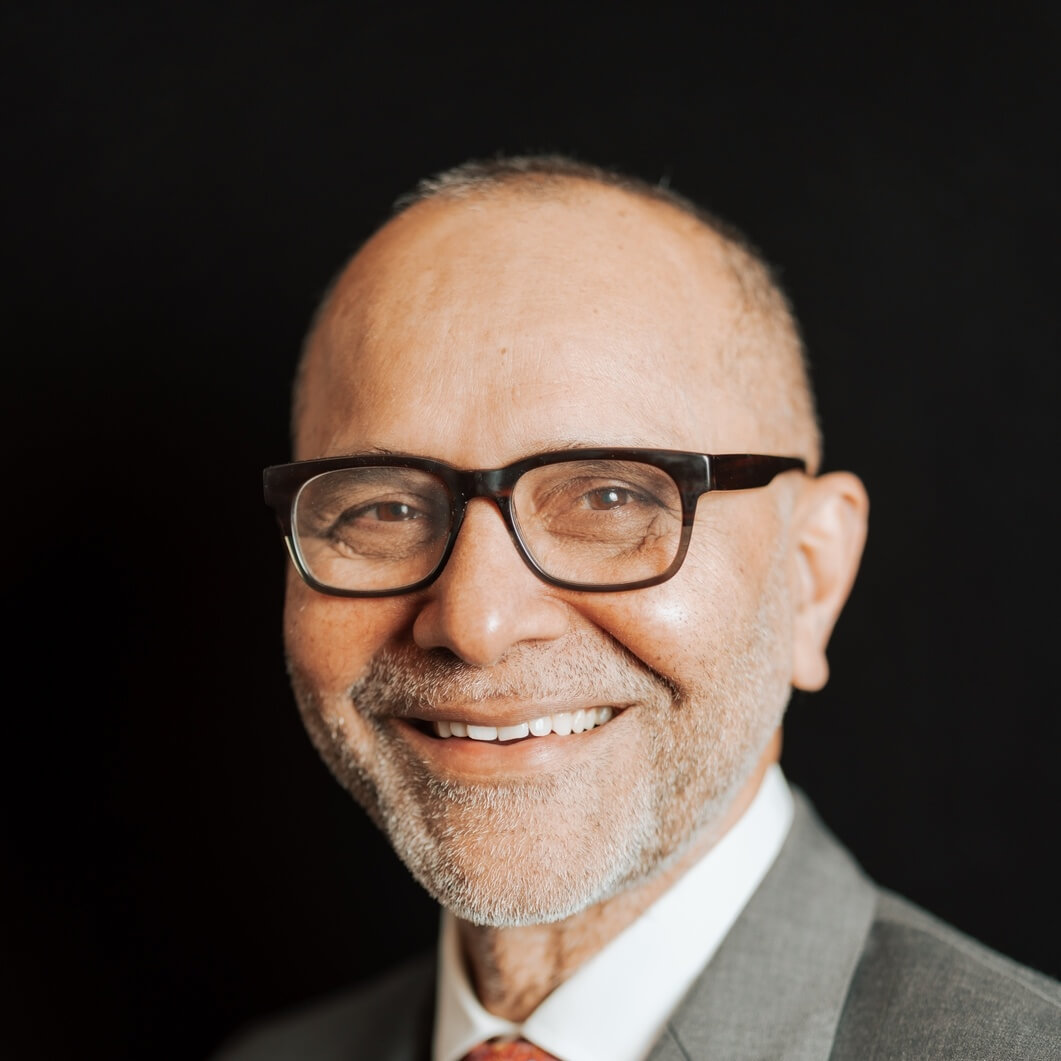
Babar Rao, MD
Organizing President
Rutgers Robert Wood Johnson Medical School
Assistant Professor of Dermatology, Weill Cornell Medical School
Associate Professor of Dermatology, California Health Sciences University

Trilokraj Tejasvi, MD
Organizing President
University of Michigan
Dermatology Director and Teledermatology
Director of Cutaneous Lymphomas Program, University of Michigan - Department of Dermatology
Ivy Lee, MD
Scientific Chair
American Academy of Dermatology
Juthika Thakur, MD
Organizing Secretary
Member of Canadian Dermatology Association, American Academy of Dermatology, American Society for Dermatologic Surgery, and Ontario Medical Association
Lillia Correa, MD
Scientific Co-Chair
The University of South Florida
Tran Do, MD, PhD
Scientific Co-Chair
Poonam Guinn
Managing Director and Treasurer
Jessica Stodart
Manager
ISDHD EC
Trilokraj Tejasvi, MD
President
Elvira Moscarella, MD
Vice President
Christophe Hsu, MD
Secretary
Dinesh Kumar Devraj, MD
Secretary
Meenal Khetarpal, MD
EC Member
Manu Jain, MD
EC Member
Athiya Haroon, MD
EC Member
Gerald Gabler
Treasurer
Amanda Oakley, MD
Immediate Past President
Continental Representatives
Americas
Juthika Thakur, MD and Monica Ramos, MD
Africa
Nicas Salva, MD
Asia
Somesh Gupta, MD
Europe
Paula Pasquali, MD and Jilliana Monnier, MD
Australia
Amanda Oakley, MD
Official journal of the society: JMIR - Dermatology
WCDHD 2027 Objectives
Course Objectives
By the end of the day, attendees should be able to:
- Describe how AI is currently used in non-invasive skin imaging and where the evidence stands.
- Evaluate a teledermatology/AI triage tool for their own practice.
- Use large language models (LLMs) safely and effectively for documentation, patient education, and literature review.
- Recognize how AI is reshaping retail/consumer dermatology and what it means for patient expectations.
- Identify key ethical, legal, and data-security risks of AI tools in clinical practice, including the equity and liability implications of the digital divide.
- Critically assess dermatology content from social media and AI-generated sources, including influencer-driven misinformation.
- Recognize how the digital divide — gaps in device access, connectivity, digital literacy, language, and socioeconomic status — shapes who benefits from AI-enabled dermatologic care and identify strategies to avoid widening disparities in their own practice.
Additional information
| Registration Type | Member, Non-Member, Student, Industry, Virtual Attendance |
|---|